

Get Started
Willow is currently serving patients 18+ years of age located in New York and North Carolina.
For any questions, call: 844-488-3223


Booking Confirmation
Willow is currently serving patients 18+ years of age located in New York state.
How to Talk to Someone About Suicidal Thoughts



You could possibly play a role in saving a life by knowing how to talk to someone about suicidal thoughts. Anyone can talk to someone they’re concerned about. In this article, we offer some strategies anyone can use to support someone you are concerned about. Everyone has a role to play in preventing suicide.
The information in this article is for educational purposes only and isn’t a substitute for formal training in crisis intervention.
In this article, we will cover warning signs, tips for starting the conversation, and when to involve crisis services. If you or a loved one is experiencing thoughts of suicide, reach out to the National Crisis Hotline by calling or texting 988.
Signs to Look For When Recognizing Suicidal Thoughts
Here are some warning signs that you may notice that may not necessarily indicate the person is having thoughts of suicide, but they can be signs that it's a good idea to check in on them to ensure they are safe:
- Talking about death or dying
- Expressing hopelessness or feeling trapped
- Giving away possessions
- Withdrawal from relationships and activities
- Sudden mood changes or calmness after depression
- Increased substance use
- Feelings of anger, rage, anxiety, or depression
- Recent significant loss or trauma
- Impulsive or self-destructive behaviors
Urgent Warning Signs
If someone demonstrates any of the following, it is highly likely they may be at risk of suicide, and those close to them need to take some kind of action to keep them safe:
- Talking about suicide
- Specific plans or means, including searching for lethal methods online
- Making final arrangements or telling people goodbye
- Reckless or dangerous behaviors
- Statements like "you'll be better off without me"
Preparing for the Conversation
Below, we outline some suicide conversation tips to help you get started.
Finding the Right Time and Place
To ensure the conversation is most effective, find a time to talk to them in private without interruptions. It is vital that the conversation not be rushed, and you have time to be fully present without feeling distracted. Broach the topic while you are both relatively calm and not emotionally escalated.
This is a conversation best had in-person if possible, but if not, over the phone if needed will suffice, but not via text- this is too important.
Mentally Preparing Yourself
Before initiating the conversation, first, take time to ground yourself mentally and emotionally. Take some slow, deep breaths, or try some of the other techniques in our article Calming Techniques for High-Stress Situations.
Let go of any expectations you may have for a specific outcome, and be open to listening more than you speak. Be ready to stay calm and present if the answers to your questions are difficult or not what you were hoping for. Come prepared, and have resources and support numbers available.
Starting the Conversation
Next, in this section, we are going to cover what to ask if you have concerns and what to say to a suicidal person if the person is at risk.
Remember, listening and connection are powerful interventions, so ensure throughout the conversation you aren’t just listening to respond. Stay dialed in to what the other person is expressing.
Opening with Direct Compassion
When asking about suicide, directness and compassion are key. Start with something you have observed and express concern, such as “I’ve noticed you’ve been feeling really down lately and I’m worried.” Express that you care about them by saying something along the lines of "I care about you and want to understand.”
It may seem counterintuitive, but we promise you can’t “give someone the idea” for suicide. The best way to know what they are thinking is to directly ask them, "Are you thinking about suicide?" The clarity of this directness is the kindest - and safest - thing you can do for them.
What to Say
Verbalize your support and care for them clearly and directly. Here are a few ideas for things to say to show support:
- "I'm here, and I'm listening." - This shows that you care and they are a priority.
- "You're not a burden to me." This helps counteract the sense of being a burden that many people experience.
- "This must be so painful." - Saying this shows empathy for what they are experiencing.
- "I'm glad you're telling me." - By saying this, you express gratitude for their honesty.
- "You don't have to go through this alone." - Saying this reminds them that they are not alone, even if they feel as if they are.
What NOT to Say
Here are a few examples of what not to say to a person experiencing suicide risk. This isn’t an exhaustive list, but it can help to know what to avoid:
- "You have so much to live for" - This is dismissive of the pain and hopelessness that is very real for them.
- "Think about your family" or "You're being selfish"- This can induce feelings of guilt or shame, and make them feel even worse.
- "It's not that bad," or "others have it worse," or "You don't really mean that" - Saying something like this is minimizing and invalidating how they are feeling.
- "Just think positive" - While this may be trying to be helpful, it is actually oversimplifying a very complex situation.
- Religious judgment or platitudes can be invalidating or irrelevant to the person and may increase their feelings of guilt and shame.
Active Listening and Support
Active listening strategies can go a long way in supporting a suicidal friend, family member, or loved one. Here are a few ways to show support.
Creating Safe Space
Try to listen without judgment or trying to fix the situation. Use silence as a way to make space for them to share and process what they are thinking and feeling.
It is possible to validate their pain without agreeing that suicide is the answer. Ask open-ended questions to prompt them to share. Use reflections, and rephrase what the person said, and ask them if you understood them correctly. This is a way to show you are closely listening. Try to stay present, even when difficult emotions and thoughts are expressed.
Assessing Immediate Risk
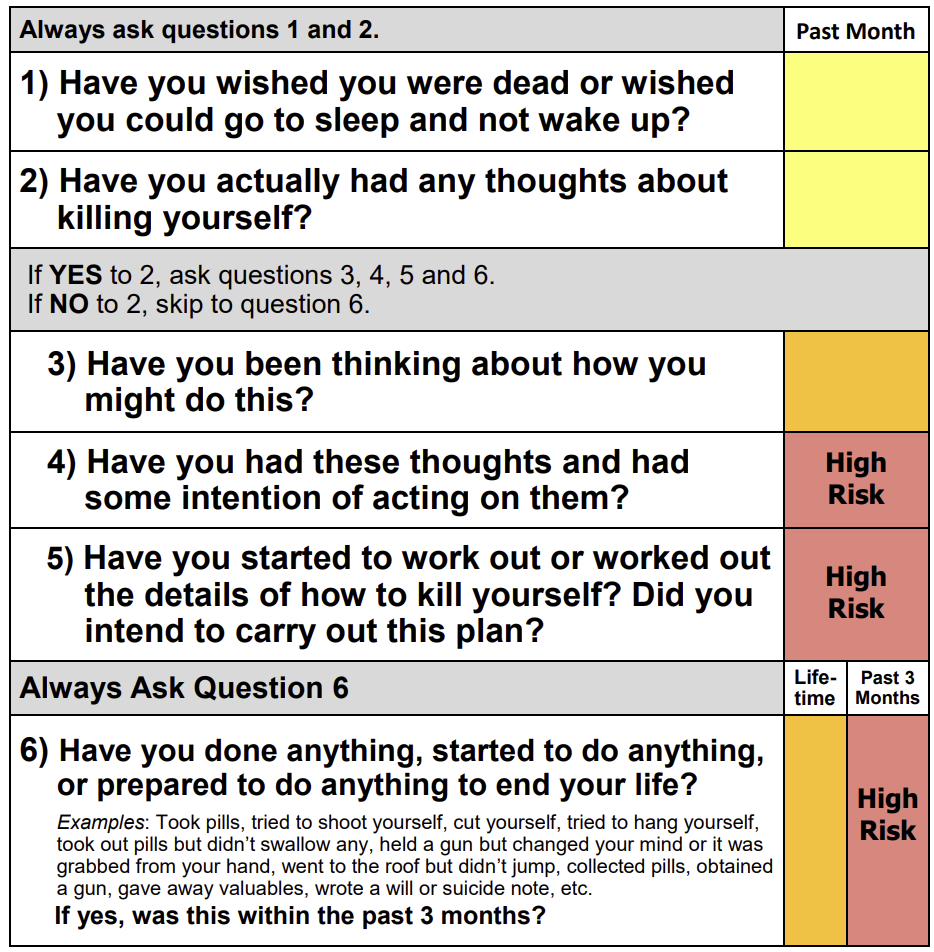
The Columbia-Suicide Severity Rating Scale (C-SSRS) is the most evidence-based intervention to help assess for suicide risk and determine what course of action is recommended. It is simple and straightforward to use. This tool guides people through the signs that are least to most severe, as suicide risk is a range.
If the person answers “Yes” to question 2 or 3, they should be assessed by a mental healthcare clinician. If YES to 2 or 3, seek behavioral healthcare for further evaluation. If the answer to 4, 5, or 6 is YES, get immediate help: Call or text 988, call 911, or go to the emergency room. STAY WITH THEM until they can be evaluated.
Collaborative Problem-Solving
In addition to ensuring safety in the moment, there are other ways to show support. Ask the person, "What would help right now?" to help elicit their own problem-solving process. Prompt them to identify their reasons for living, but without forcing positivity.
Ask them who else in their personal network can be a part of their support team. Create a safety plan with them and ensure that any lethal means are safely stored or removed; more information on this will be discussed in the section below.
Taking Action Together
Helping someone with suicidal thoughts requires a balance of respecting the person’s autonomy while also the need to keep them safe.
There can also be conflicting confidentiality and safety considerations, but remember that their safety is the most important thing. Experiencing suicide risk is a medical emergency requiring an appropriate response.
Immediate Safety Steps
If the person is at imminent risk, there are several ways to ensure their safety. Stay with them until someone else can be with them or they receive professional support.
Call the 988 Suicide & Crisis Lifeline together. Contact their therapist or psychiatrist, and involve a trusted family member or friend - as long as they’ve given permission. Remove lethal means from their environment. If needed, go to the nearest emergency room.
Connecting to Professional Help
Professional help is essential. Remember, you're a bridge, not the only support. If they don’t have established care with a mental health clinician, encourage them to seek that out. Offer to help them locate potential providers, schedule appointments, and go with them to their first appointment.
Virtual offerings are helping more people who need support access services such as online therapy and support groups. Emergency services should be involved if the person is an active danger to themselves or others. More resources are listed below.
Building a Safety Plan
The Stanley-Brown Safety Plan is the most evidence-based way to create an effective plan for ensuring someone at risk of suicide is safe. This can be completed by anyone who is supporting someone at risk of suicide. It covers the following:
- Identifying warning signs that their risk is increasing
- Internal coping strategies they can use on their own
- People and places that provide distraction
- Personal contacts, such as friends and family, they can ask for help
- Professional contacts, crisis hotlines, and emergency numbers
- Ways to make the environment safer by removing or restricting access to items that could be used to harm themself, such as firearms, sharp objects, and medications
Ongoing Support and Follow-Up
When it comes to suicide intervention and prevention, it’s vital to not only support the person during a crisis. Following up and ensuring they have lasting support can also save lives and help prevent a recurrence of suicide risk.
Dealing with Certain Situations
Some situations are more challenging than others. Here are a couple of scenarios and tips for managing them.
If They Won't Talk or Get Help
In an ideal world, every conversation with someone you are concerned with would go smoothly and as planned. That isn’t always the reality.
When someone is showing concerning signs but isn’t reporting that they are an active danger to themselves, being open and flexible can help you resist the urge to take control and risk pushing the person away. Forcing someone to accept help rarely works. Remain calm, and express your desire to be there for them should they want to talk in the future.
Maybe send them a text or email with resources they can access on their own. If a person is in imminent danger, there may be a need to breach confidentiality to ensure their safety.
If You're Concerned About a Child or Teen
If the individual you are concerned about is a child or teenager, always contact and involve their parent or legal guardian, except in cases where there is abuse present.
They need to know what is going on to ensure their child is safe and gets the support or treatment they need. There are many supports and resources for children and teens, including school counselors and social workers, who can offer invaluable support and area resources.
Many locales have dedicated crisis teams for this age group. Calling your local crisis hotline or 988 can help locate those. It’s also a good idea to be familiar with your state’s requirements for reporting child abuse and suicide risk.
After a Suicide Attempt
If the person is hospitalized, the time immediately following discharge is crucial for safety and support. People need meaningful and lasting support to help prevent future risk of suicide, but also to ensure they have a good support system in place should they need it.
If there were ruptures in relationships, couples or family therapy may be an excellent resource to reconnect in healthy ways. Be sure to check in periodically to talk about their experience and to ask how they are doing to show ongoing support. Remember to continue taking care of yourself so you can best support others.
Crisis Resources and Next Steps
Below are some resources that can offer invaluable support in times of crisis and emotional stress. Resources and support can be used preventively to help avoid a crisis, as well as be there in times of urgent need. Remember, caregivers also need support, and some of these resources can help you find support groups or therapy for yourself.
Crisis and emergency resources:
- 988 Suicide & Crisis Lifeline - Call or text 988, and online chat is available through the website
- Veterans Crisis Line- Call 988 and press 1
- Crisis Text Line: Text HOME to 741741
- Local emergency services (911)
Other ways for finding support and help locating resources in your area:
- International Association for Suicide Prevention - IASP offers resources and education about suicide
- Trevor Project (LGBTQ+ youth): Call 1-866-488-7386 or text 678-678, and online chat is available through their website
- SAMHSA National Helpline: Call 1-800-662-HELP (4357) to find mental health and substance use support and treatment
- Calling 211 can help locate a wide variety of resources in your area
Takeaway
There is hope, and effective treatment is available for people experiencing thoughts of suicide. Treatment can include talk therapy and medications, and also involve peer support and lifestyle changes.
If you or your loved one is looking for mental healthcare or crisis support and prevention, reach out to us at Willow Health today. We offer same-day or next-day appointments with both a psychotherapist and a psychiatric medication clinician, who can assess your needs and identify a plan for individualized care.
Sources and Resources
The Columbia Lighthouse Project
Stanley-Brown Safety Planning Intervention
National Helpline for Mental Health, Drug, Alcohol Issues | SAMHSA
This article is provided for educational purposes only and is not to be considered medical advice or mental health treatment. The information contained herein is not a substitute for seeking professional medical advice for health concerns. Use of the techniques and practices outlined in this article is to be done cautiously and at one’s own risk, and the author/publisher is not liable for any outcomes a reader may experience. The author/publisher is not liable for any information contained within linked external websites. If you are experiencing a life-threatening emergency, please call 911 or the Suicide and Crisis Lifeline at 988.